For beginners, the justice tarot card meaning is both enjoyable and challenging in equal measure. You know like in the cards you’ve drawn, you can see the possibilities, but you find it hard to access the subtle meanings they present to you.
I understand! All must start anywhere and there is no exception to reading tarot cards. So I’ve put together a 5-step tutorial for all you beginners out there to read tarot cards correctly. Any of the more well-practiced readers might even find a few helpful suggestions. This is primarily targeted at people who like to read the tarot for themselves, but you can find that certain points can be extended to someone else’s reading of the tarot cards almost as quickly. I hope you find my concise guide helpful.
1) When you are comfortable and open to any and any update that come in, reading tarot cards is smoother. Said sometimes but not clarified as often. The explanation why this is so necessary is that while you are hopeful of a certain result, it’s a huge incentive to consult the cards. Unfortunately, your understanding of the cards will only impact this and you will thus totally lack the insight they bring. Wishful thinking doesn’t count as reading, I’m afraid. In order to have an open mind, if you are concerned or nervous about a situation, tempting as it is, try to wait before you feel calmer.
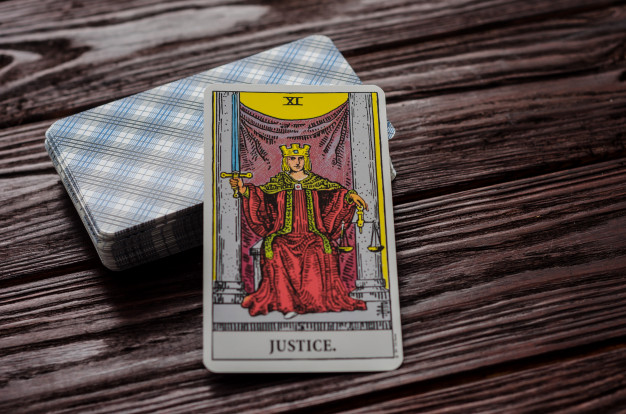
2) Tarot cards refer to the divisions of either the Main Arcana or the Minor Arcana. If you’re a novice, you’re likely to keep a book to hand to support you with the meanings of the card. This is a smart thing, but don’t lose sight of the meanings the party affiliation of a card may have. For starters, Big Arcana also has a more powerful message, and if one of these cards turns up, it can mean that you really have to wake up and take note. The Cups also point at mental difficulties in the Minor Arcana. Get familiar with these general principles, as well as emphasis on particular interpretations, as the message of your reading can be subtly modified.
3) You can find it useful to try various spreads when reading tarot cards for a particular reason, eg, a love reading. In compliance with the rules of the spread you have picked, a tarot spread involves putting the cards in an order and position. The location of a card reflects a part of your life, such as the past or the present, etc., and indeed it is another means of subtly altering the sense of a card! The Celtic Cross is a common tarot spread, but you can browse around for adaptations.
4) Not everyone has a powerful psychic talent. All should however, draw on the latent talents that we all have. This skill would be noticeably improved by reading tarot cards on a daily basis, or at least very frequently. You can find that every time you inquire about a certain subject, certain imagery or meaning comes to you, or that certain cards often come up in terms of certain areas. Get to recognize this new voice’ – it’s yours and it’s precious to you. The first and best response to a question is always psychic insight, so learn to trust the connections you start to create and you will be on the right track.
5) Carefully pick your tarot deck. The Rider Waite deck is the most common and it is definitely accurate and simple, so for beginners, it is an excellent place to start. Another famous one is the Tarot of Marseilles. The most significant aspect is the need to talk to you about the imagery. Were you still attracted to fairies? Perhaps the best for you will be a deck of fairies reflecting the different cards? The same thing if you’ve still associated yourself with pagan deities. Know that it’s personal to read tarot cards, so step towards the things you want and understand. Feel free to get many packs to hand so that according to your mood, you can select a deck.
 About Justice Tarot